How to Plan Your Week as a Freelancer: The Friday Close-Out Method
A weekly planning system for freelancers: a Monday plan, honest carry-forward, aging items, waiting-on tracking, and a Friday review of planned vs actual work.
Most freelancers plan their week once, on Monday morning, and then let the week happen to them. By Friday the plan is half done, the rest is scattered across next week, and nobody has looked at why. The Friday close-out method fixes the second half of that cycle. You plan on Monday, carry work forward honestly, watch which items keep slipping, track what you are waiting on, and close each week with a short review that compares what you planned with what you did.
In this guide
- 01Why do weekly plans fall apart for freelancers?
- 02How should you build a Monday plan?
- 03How do you carry unfinished work forward without losing track?
- 04What should you do about tasks that keep slipping week after week?
- 05How do you track work that is waiting on someone else?
- 06What is the Friday close-out review?
- 07How do you compare planned work with what actually happened?
Why do weekly plans fall apart for freelancers?
Weekly plans fail for predictable reasons. The plan is too full, because you listed everything you hoped to do rather than what fits. Client requests arrive mid-week and push planned work aside. Some items depend on other people who have not replied. And at the end of the week, unfinished items quietly roll into the next plan without anyone asking why they did not get done.
None of these are character flaws. They are the normal conditions of independent work. You do not control your inbox, and you cannot predict every request. A good planning system accepts that and builds in ways to see what happened. The goal is not a perfect week. The goal is a plan that gets more accurate each week because you learn from the last one.
How should you build a Monday plan?
Start with your fixed commitments: calls, meetings, and deadlines already on the calendar. Then look at what carried forward from last week. Only after that should you add new work. This order matters, because it forces you to see how much of the week is already spoken for before you fill the rest with optimism. Carried items go in before new ones because they are older promises.
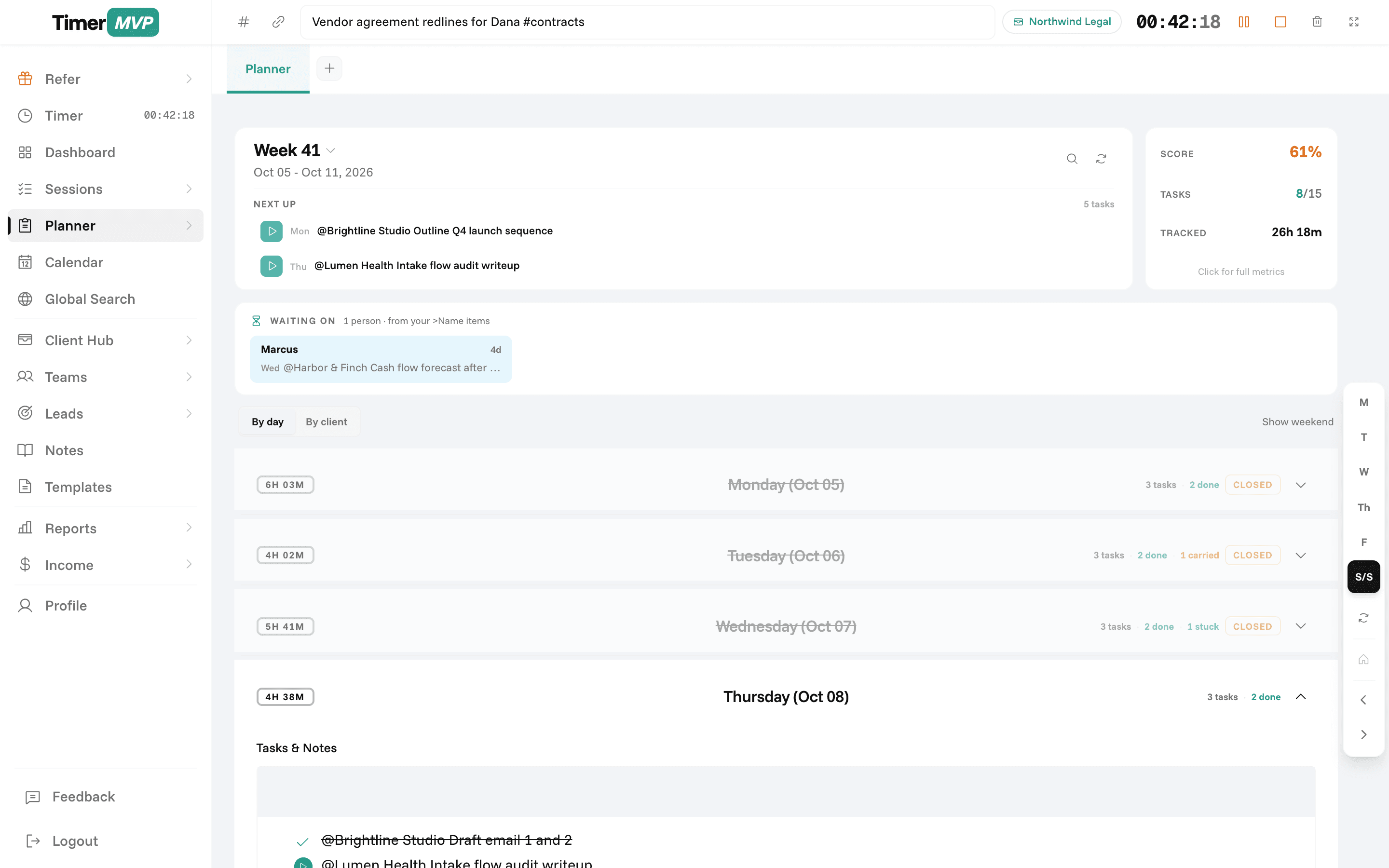
Assign items to specific days rather than keeping one long list for the week. A list of twenty items for the week feels manageable. The same twenty items spread across five days often reveals that Tuesday has eight hours of work and a three-hour client call. Placing work on days is what turns a wish list into a plan. It also shows you where to put deep work, on the days with the fewest calls, instead of hoping a quiet hour appears.
Leave room. If you usually lose a few hours a week to unplanned client requests, and most people do, plan for that. A plan with some slack survives contact with the week. A plan with none is already behind by Tuesday afternoon. Last month's tracked time for unplanned requests is a reasonable guide to how much slack you need to leave open.
- Block fixed commitments first.
- Review what carried forward from last week.
- Place each item on a specific day.
- Leave unplanned capacity for client requests.
How do you carry unfinished work forward without losing track?
Carrying work forward is normal. The problem is carrying it forward silently. When an unfinished item simply reappears on next week's list, you lose the information that it slipped. Do that a few times and you end up with items that have been on your list for a month, still feeling new each Monday. The list grows, your confidence in it shrinks, and eventually you stop trusting the plan at all.
Make carry-forward an explicit step. At the end of the week, look at each unfinished item and decide: move it to next week, schedule it further out, delegate it, or drop it. Moving it is fine. Moving it without thinking is the habit to break. The decision takes seconds per item and keeps the list honest. Dropping an item is a valid outcome. If something has no deadline, no client waiting on it, and no clear benefit, removing it is better than carrying it forever.
Mark moved items visibly so you can see them in next week's plan. A moved item is not a failure. It is a piece of information about your capacity, your estimates, or the item itself, and you want that information in front of you when you plan. If half of next week starts as moved work, you know before Monday that there is less room for anything new, and you can say so to clients early instead of late.
What should you do about tasks that keep slipping week after week?
Some items move once and then get done. Others move every week. The second kind deserve attention, and the easiest way to spot them is to track how old each item is. An item added three weeks ago that has never been started is telling you something, and age makes that visible without you having to remember when you first wrote it down.
When an item crosses a threshold, maybe two or three weeks, stop moving it and ask why. Usually the answer is one of a few things. It is too big and needs to be broken into a first step. It is unclear and needs a decision before you can start. It depends on something you do not have. Or it does not actually matter, and you should drop it.
Seeing age next to each item means a task that has slipped for weeks looks different from one you added yesterday. Whatever tool you use, make age visible. Old items hide easily in a long list, especially when new requests keep arriving on top of them. A simple count of weeks next to each item is enough to make the stubborn ones stand out during your review.
How do you track work that is waiting on someone else?
A large share of freelance work stalls because you are waiting: for client feedback, for a file, for an approval, for a payment. If those items sit in your plan looking like any other task, they make you look behind when you are actually blocked. They also make it easy to forget to follow up. A waiting item that nobody chases can sit for weeks, and the delay often lands on you when the client finally replies and expects the work done right away.
Mark waiting items differently from the rest. Note who you are waiting on directly in the item, so the plan shows both what is stuck and whose move it is. When you review the week, waiting items should not count against your own completion, because you cannot finish them alone. In the TimerMVP planner you can mark an item with the person's name to flag it as waiting on them. Any clear marker works, as long as you use it consistently.
Then use the list. Every waiting item is a follow-up you can send. A short message on Monday morning to each person you are waiting on clears a surprising number of blockers. Without a clear list, those follow-ups depend on memory, and memory is exactly what a busy week erodes. Seeing names next to items also shows you patterns. If the same client appears on the waiting list every week, that is worth raising, because their delays are shaping your schedule.
- Mark the item as waiting and name the person.
- Exclude waiting items from your own completion score.
- Send follow-ups from the waiting list at the start of each week.
What is the Friday close-out review?
The Friday close-out is a twenty to thirty minute review at the end of your week. You go through the plan item by item and mark each one done, moved, or waiting. You look at your tracked hours for the week. And you write down one or two things you learned. That is the whole method, and its value comes from doing it every week.
Doing this on Friday, not Monday, matters. On Friday you still remember why things slipped. By Monday the reasons have faded, and the review becomes a list of guesses. Closing the week also gives you a clean start. Monday's plan begins from a known state instead of a vague sense that some things are still outstanding. Many people find the weekend is easier to enjoy when the week has been properly closed.
End the review with a quick look ahead. Note anything already fixed for next week, any deadlines, and the follow-ups you will send. Monday's planning then takes ten minutes instead of an hour. Keep the notes from each review in one place. Reading the last few before you plan a new week is a fast way to remember what tends to go wrong and what you already decided to change.
How do you compare planned work with what actually happened?
Planned versus actual is where the method pays off. Compare the items you planned against the items you finished, and compare the hours you expected to spend with the hours you tracked. Over a few weeks, the gaps show patterns. You may consistently underestimate one type of work, or lose a predictable block of time to one client every week.
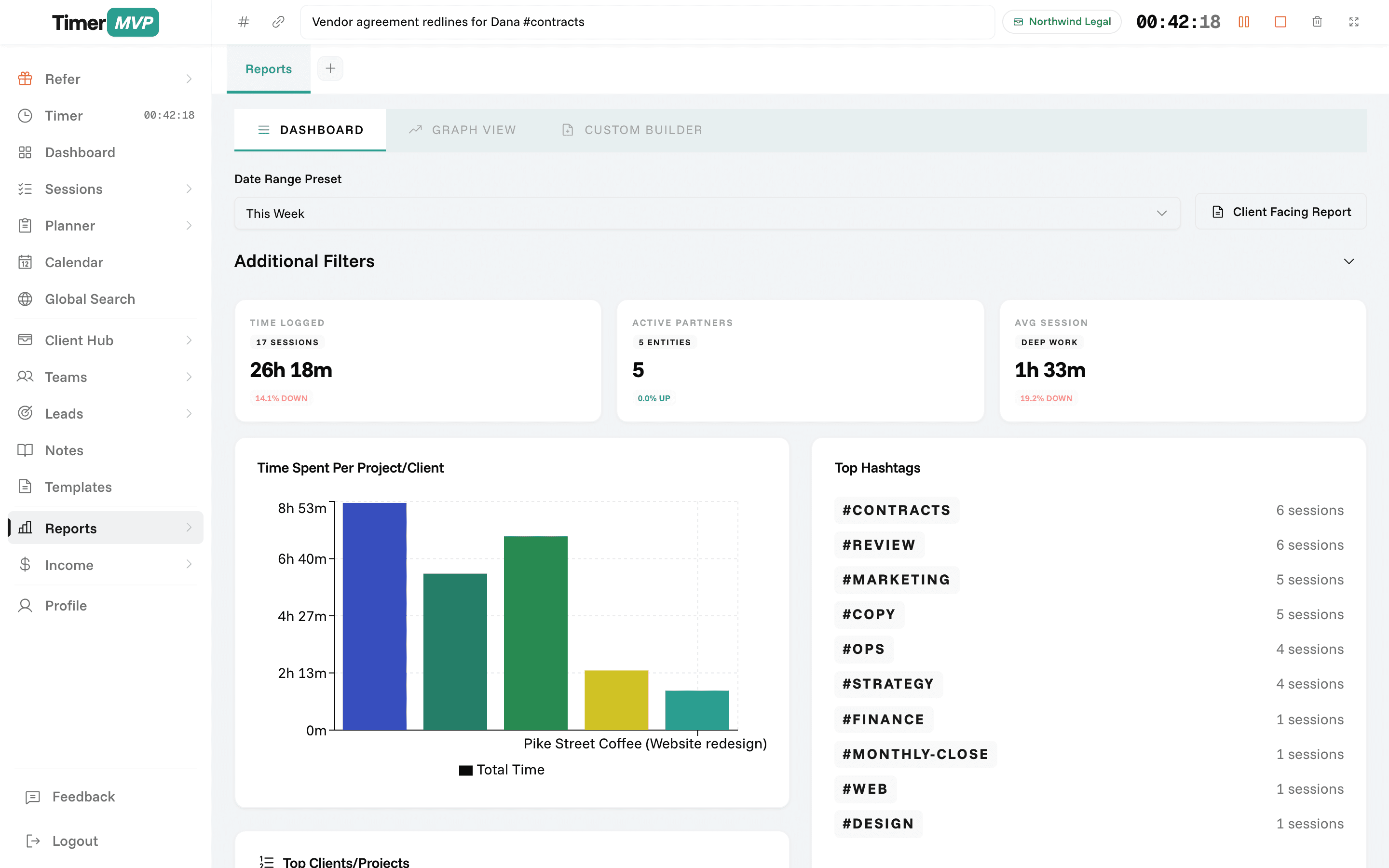
Your time records are the actual side of the comparison. If you track time against clients and projects, you can see exactly where the week went, which is often quite different from where it felt like it went. A week that felt wasted may turn out to have been full of client calls. A week that felt productive may have been mostly admin.
Use what you learn to adjust the next plan, not to judge the last one. If you finish about two thirds of what you plan, plan a little less and protect it better. Accuracy is the goal. A plan you can trust is worth more than an ambitious one you abandon by Wednesday, and a trusted plan makes it far easier to tell a client honestly when you can take on their next request.